• Request Info
  • Visit
  • Apply
  • Give
  • Request More Info
  • Visit
  • Apply
  • Give

Search

A-Z Index Map

Geography and Sustainability

  • About
    • Facilities
    • Alumni
    • Research & Community Partners
    • Geographic Links
  • Areas of Study
    • Physical Geography
    • GIST
    • Human Geography
    • Sustainability
  • People
    • Faculty
    • Staff
    • Graduate Students
    • Adjunct & Affliated Faculty
    • Alumni
    • Emeritus
  • Undergraduate
    • Where Can a Geography Degree Take You?
    • Majors
    • Minors
    • Certificates
    • Advising
    • Forms
    • Apply
  • Graduate
    • MS Program
    • PhD Program
    • Apply
    • Graduate Handbook
    • Forms
  • Student Engagement
    • Clubs
    • Community Engagement
    • Awards
    • Internship and Employment
    • Study Abroad
  • News & Events
    • Statements
    • Share Your News
    • Newsletters
    • News
    • Events
    • Geography Awareness Week
    • GeoSym
topography background

News

Department News

Assistant Professor in Geographic Information Science

August 1, 2024

The Department of Geography & Sustainability at the University of Tennessee, Knoxville is seeking applicants for a tenure-track position in Geographic Information Science at the Assistant Professor level starting August 1, 2025. We are especially interested in scholars making theoretical advances in the areas of GeoAI, spatio-temporal modeling, or geospatial data science. Applicants who would contribute to existing department strengths in human dynamics, human-environment interaction, hazards, or environmental geography are strongly encouraged.

The successful candidate will be expected to establish and maintain a strong program of research and publication in Geographic Information Science and to develop a robust, externally funded research portfolio that advances the candidate’s research as well as the mission of the Department of Geography & Sustainability. The successful candidate will provide support to our degree programs by teaching engaged undergraduate and graduate courses (3–4 courses/year), and taking an active role in bringing currency and creativity to curriculum development. They will also provide service to the department, university, and discipline. The successful candidate will demonstrate an ability to mentor graduate and undergraduate students. UTK is a land-grant university and values engaged forms of research/scholarship/creative activity, teaching, and service, and considers evidence of these commitments in the records of applicants. The Knoxville campus of the University of Tennessee is seeking candidates who have the ability to contribute in meaningful ways to the diversity and intercultural goals of the University. Applicants must have a doctoral degree in Geography or related field at the time of appointment.

The Department of Geography & Sustainability occupies the Burchfiel Geography Building at the heart of the Knoxville campus. The department consists of 26 full-time faculty committed to maintaining teaching and research excellence in human geography, physical geography, sustainability, and GIScience. The department also has a student-centered, award-winning program of academic excellence supporting approximately 50 graduate students (MS and PhD), and 200 undergraduate students majoring and minoring in Geography (BA), Sustainability (BA), or Geographic Information Science and Technology (BS). To learn more about the department, visit: http://geography.utk.edu.

The University of Tennessee, Knoxville is the flagship educational institution in the State of Tennessee. The city of Knoxville is a hidden gem with a beautiful and walkable downtown, a diverse music scene, active neighborhoods, unique restaurants, and a robust offering of outdoor and cultural activities. Knoxville is located within easy driving distance to Asheville, Nashville, Atlanta, and the Great Smoky Mountains. Knoxville has a metropolitan population of 850,000 people, and the region houses many leading science agencies, including Oak Ridge National Laboratory, and the Tennessee Valley Authority.

Qualifications

Required Qualifications: The candidate must be a Geographic Information Scientist and have earned a PhD in Geography, Geospatial Science, or in a closely related discipline by the time of appointment.

Preferred Qualifications: Ability to teach courses related to GeoAI and geospatial programming.

Application Instructions

Candidates should apply through Interfolio at apply.interfolio.com/150230, providing a cover letter, curriculum vitae, and two separate statements on Research and Teaching. In addition to addressing their qualifications for the position in their application, candidates may describe how they would help promote students’ access to educational advancement and inclusion in the department and the University of Tennessee through their teaching and research/scholarship/creative activities. Candidates must also arrange to have three letters of reference sent by the deadline. All inquiries should be directed to Dr. Yingkui Li, Search Committee Chair, Department of Geography & Sustainability, University of Tennessee, Knoxville, TN 37996-0925 (yli32@utk.edu). To ensure full consideration, all materials, including references, should be submitted by September 6, 2024, at 5 PM EST. Review of applications will continue until the position is filled.

Equal Employment Opportunity Statement

All qualified applicants will receive equal consideration for employment and admission without regard to race, color, national origin, religion, sex, pregnancy, marital status, sexual orientation, gender identity, age, physical or mental disability, genetic information, veteran status, and parental status, or any other characteristic protected by federal or state law. In accordance with the requirements of Title VI of the Civil Rights Act of 1964, Title IX of the Education Amendments of 1972, Section 504 of the Rehabilitation Act of 1973, and the Americans with Disabilities Act of 1990, the University of Tennessee affirmatively states that it does not discriminate on the basis of race, sex, or disability in its education programs and activities, and this policy extends to employment by the university. Requests for accommodations of a disability should be directed to the Office of Equal Opportunity and Accessibility, 1840 Melrose Avenue Knoxville, Tennessee 37996-3560 or eoa@utk.edu or (865)974-2498. Inquiries and charges of violation of Title VI (race, color and national origin), Title IX (sex), Section 504 (disability), the ADA (disability), the Age Discrimination in Employment Act (age), sexual orientation, or veteran status should be directed to the Office of Investigation & Resolution 216 Business Incubator Building 2450 EJ. Chapman Drive Knoxville, Tennessee 37996 or (865)974-0717 or investigations@utk.edu.

Filed Under: Department News, GIST

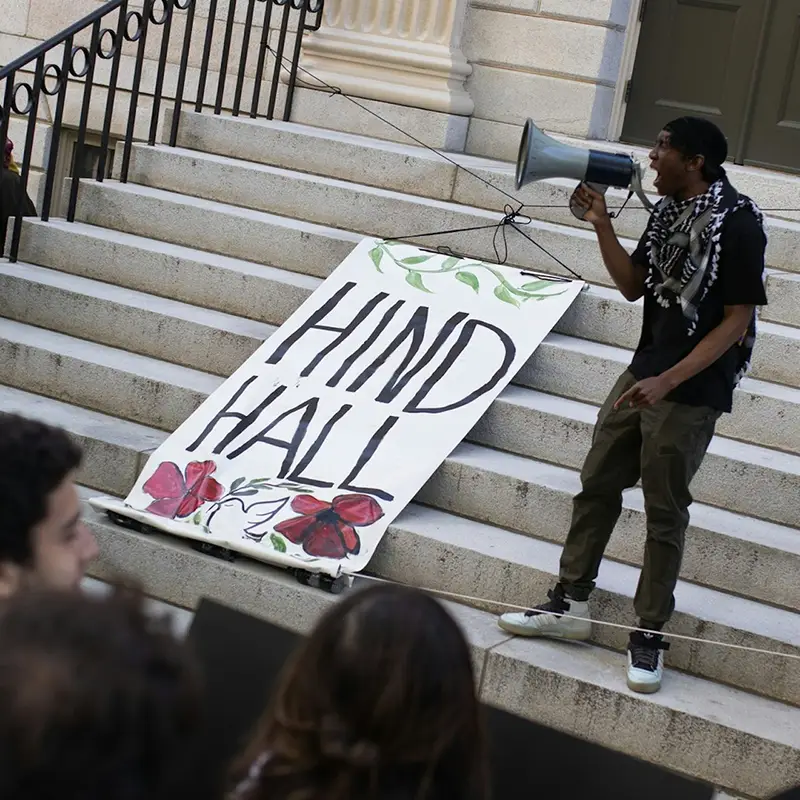
A man standing on steps with a megaphone with a sign beside him with the text Hind Hall on it

Derek Alderman in ‘The Conversation’: “The renaming of universities and campus buildings reflects changing attitudes and values”

June 21, 2024

a student protester in front of a campus building
A student protester with a banner reading ‘Hind Hall’ at a Harvard University building. Student protesters at several universities have unofficially renamed campus buildings in response to the war in Gaza. (Frank S. Zhou/The Harvard Crimson)
Reuben Rose-Redwood, University of Victoria; CindyAnn Rose-Redwood, University of Victoria, and Derek H. Alderman, University of Tennessee

As protests have swept across university campuses calling on higher education institutions to break ties with Israel over the war in Gaza, one tactic that protesters used to raise awareness of the war’s devastating human cost has been renaming campus buildings.

When protesters occupied Hamilton Hall at Columbia University in April, they displayed a banner renaming the building “Hind’s Hall,” which is also referenced in rapper Macklemore’s protest song of the same name. This name recognizes Hind Rajab, a Palestinian child whose story went viral after her killing in Gaza. Israel denied responsibility, but the death sparked international outcry after Palestinian paramedics released audio of a desperate phone call as gunfire erupted.

Student protesters at Harvard University, the University of California at Berkeley, McGill University and the University of Melbourne also unofficially renamed campus buildings in response to the war in Gaza.

These fleeting symbolic name changes follow years of campus renaming efforts. Students have led many of these movements calling on universities to permanently rename places and remove monuments honouring racist historical figures.

CBC News video about the renaming of the former Ryerson University to Toronto Metropolitan University.

Many universities have developed policies to govern the place naming process on their campuses.

In a recent study, our research team examined naming policies at 620 liberal arts colleges and universities in Canada and the United States.

How inclusive are university naming policies?

Place names and other memorials contribute to the making of a campus’s cultural landscape. As elements of daily campus life, they are part of the “hidden curriculum” that expresses and teaches the values of the university community beyond the confines of the classroom.

To assess how inclusive university naming policies are, we considered several key metrics: faculty and student representation, public consultation and any reference to “diversity” (however defined) in naming policies.

Our study found that 19 per cent of university naming committees include a faculty representative and only 11 per cent have a student representative.

However, faculty and student representation are more prevalent at Canadian universities than their U.S. counterparts.

We calculated that half of all Canadian universities with naming policies have faculty representation on their naming committees, compared to only 16 per cent of U.S. higher education institutions. Student representation on naming committees is also higher in Canada (21 per cent) than the U.S. (10 per cent).

Additionally, our research findings indicate that five per cent of university naming policies mention public consultation (18 per cent in Canada and four per cent in the U.S.).

The proportion is even lower for naming policies that refer to “diversity” broadly conceived (two per cent total, with three per cent in Canada and two per cent in the U.S.). An example of such a diversity statement can be found in the naming policy at California State University at East Bay. One of its naming principles is “the desirability of achieving over the long run a pattern of names that will reflect the ethnic and gender diversity” in the broader society.

Racial and gender imbalances in campus names

Few universities have adopted a systemic approach to place naming that strives for diversity in the pattern of names on campus. Instead, name changes are commonly considered on a case-by-case basis to recognize wealthy donors or past university presidents, most of whom are white men.

These conventional approaches to place naming have resulted in significant racial and gender imbalances in the names on university campuses. Addressing these imbalances is an important action that universities can take to create more inclusive campus environments.

In many cases, students have led the way in pressing for change. By 2020, our study found that naming controversies were documented at 165 universities in Canada and the U.S., and this number has continued to grow.

Some universities have updated their naming policies in light of recent controversies and to repair relationships with Indigenous communities.

More inclusive naming policies needed

University naming policies play an important role in the process of campus place naming. However, many naming policies have proved inadequate to address the challenges posed by systemic inequalities in campus place names.

Here we propose three key recommendations to inform best practices for university naming policies.

Recommendation 1: University naming policies should ensure that key stakeholders – such as faculty and students – have formal representation on university naming committees.

Recommendation 2: Meaningful opportunities for public consultation should be incorporated into the campus place naming process.

Recommendation 3: University naming committees should conduct campus place name audits and develop systemic approaches to reviewing how individual naming proposals relate to the broader campus “namescape.”

These recommendations can help university leaders become more responsive to the needs of university communities. Treating place names as meaningful symbols can foster a sense of belonging in contrast to primarily viewing naming rights as assets to be exchanged for donor support.

If universities are truly committed to creating inclusive campus environments, developing policy frameworks that work toward addressing systemic imbalances in the campus landscape is a step in the right direction.The Conversation

Reuben Rose-Redwood, Professor of Geography and Associate Dean Academic, Faculty of Social Sciences, University of Victoria; CindyAnn Rose-Redwood, Associate Teaching Professor, Geography, University of Victoria, and Derek H. Alderman, Professor of Geography, University of Tennessee

This article is republished from The Conversation under a Creative Commons license. Read the original article.

Filed Under: Department News, Human Geography

Two men smiling by a conference booth with the UT Geography & Sustainability department name on it

UT Geographers Put GIS on the Map at Statewide Meeting

June 4, 2024

UT Department of Geography and Sustainability faculty, students, and staff represented Vol geography in a huge way at the annual Tennessee Geographic Information Council (TNGIC) Conference for geospatial professionals April 9–11, 2024, at Montgomery Bell State Park, in Burns, Tennessee, west of Nashville. 

Michael Camponovo, director of both UT’s GIS outreach and the GIST Program, was conference chair. A host of Vol geographers led workshops, gave presentations, and earned awards during the conference.

“As a student, TNGIC gave me the opportunity to create and share maps, give presentations, and build the professional network that eventually led to my job here at UT,” said Camponovo. “As a GIS professional, I want my students and alumni to have these same opportunities to launch their careers. That’s why I’m so passionate about getting involved with TNGIC.”

The TNGIC works to improve connections among agencies working with geographic information systems (GIS) in Tennessee. Their annual conference offers opportunities for GIS professionals and students to network, learn, and share their work and new ideas in the field. Keynote addresses at the conference were delivered by Budhendra Bhaduri, director of the Geospatial Science and Human Security Division at Oak Ridge National Laboratory, and Nikolas Smilovsky, geospatial solutions director at Bad Elf, a global navigation satellite systems company.

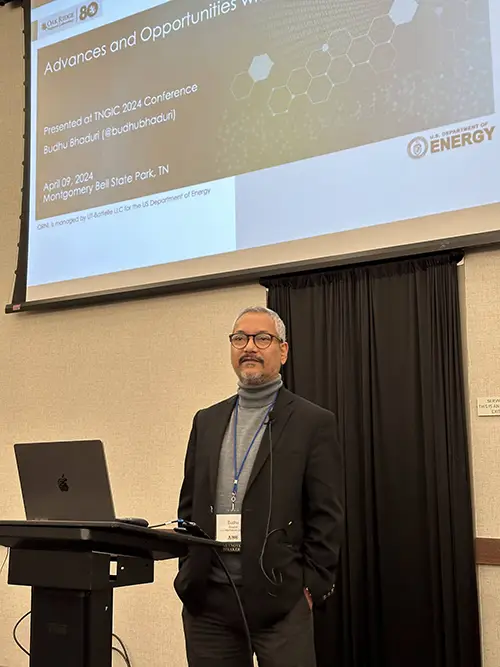
Budhu Bhaduri, Director of the Geospatial Science and Human Security Division of ORNL, gives a keynote on GeoAI. Photo by Michael Camponovo.
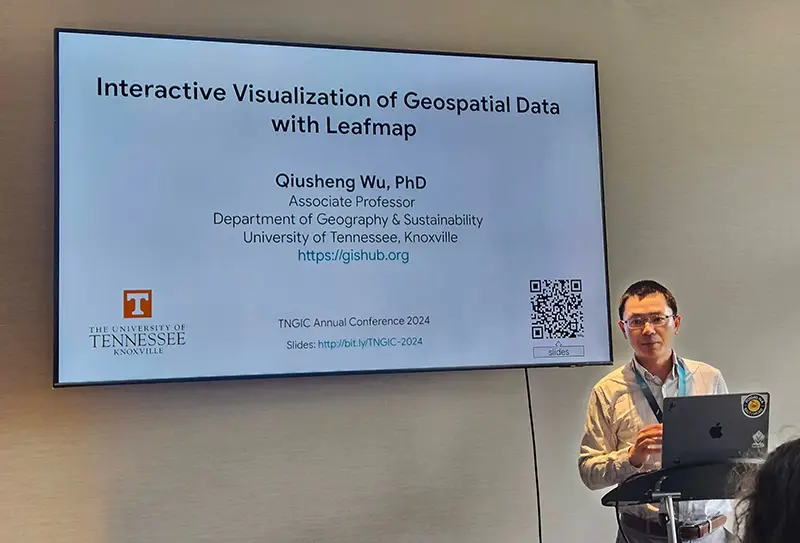
Qiusheng Wu presents his research as part of the open source special interest group. Photo by Mayra Roman-Rivera.

Associate Professor Qiusheng Wu led a workshop focused on cloud computing with Google Earth Engine and Geemap and presented with the FOSS (open-source GIS) community on Leafmap and data visualization. Wu also organized the inaugural TNView Remote Sensing Presentation Contest for students.

Lecturer Mayra Roman-Rivera and Professor Derek Alderman shared the work their students are doing as part of the GEOG 420—GIS in the Community class.

UT’s GIS Lab Manager Tim Kane volunteered with the UT cemetery mapping team to collect terrestrial lidar as part of a service project at Montgomery Bell State Park.

Student Caroline Petersen earned first place in the conference mapping contest, best analysis category, for her research using MaxEnt for pollinator prediction in Davidson County. She and fellow Vol Josiah Cubol were selected to join the TNGIC Outreach committee.

Emma Blanks and her team from GEOG 420 earned the Viewer’s Choice award in the map gallery for their work on the revised Tennessee Atlas. Blanks also gave a presentation highlighting how she and her team used ESRI’s Experience Builder to create the interactive Tennessee Atlas.

Mahnaz Meem won third place in the inaugural TNView Student Remote Sensing Presentation Contest. Cam Corsino presented a fascinating, in-depth storymap focusing on Knoxville’s Red Summer.

In a less GIS-specific activity at the conference, Ben Pedersen and recent alumnus Robby Lape won first place out of 32 teams at the 2024 cornhole tournament. They took home brand new cornhole boards as prizes.

“I hope anyone interested in learning more about GIS and geospatial technology will join us for future TNGIC events,” said Camponovo. “It’s a great way to learn about new technologies and workflows, meet alumni and network, and learn about jobs. Between presenting, submitting maps and posters, leading workshops, serving as business partners, and more, there are many ways for students and alumni to engage with the organization.”

Interested geographers can participate in the free, one-day East Regional Fall Forum in Johnson City (ETSU) on Tuesday October 15, 2024. The next annual meeting will be at the Embassy Suites in Murfreesboro April 15–17, 2025.

The geography department thanks the dozens of Vol alumni who attended the conference and made current students feel welcome within the organization:

  • Danielle (Dami) McClanahan organized the cornhole tournament and was elected to the TNGIC board of directors.
  • Tracy Homer shared her expertise with the FOSS community on creating art from digital mapping products.
  • Caitlyn Mills presented her work with Stantec for the Tennessee Department of Transportation.
  • Paul Dudley served as the TNGIC president over the last year and presented on his project of mapping all the trails in Tennessee. He was also instrumental in organizing our very first “Nerf war.”
  • Kurt Butefish of the Tennessee Geographic Alliance provided an update on K–12 geography education in Tennessee and was a business partner for the conference.
  • Danielle McClanahan, Caitlyn Mills, and Bass Neal from Stantec were also business partners at this year’s conference.
  • Tracy Homer designed and created the Tennessee Rivers laser cut map that was the grand prize for our door prizes.
  • Sam McCloud, Caelan Evans, and Danielle McClanahan were instrumental in organizing the conference.
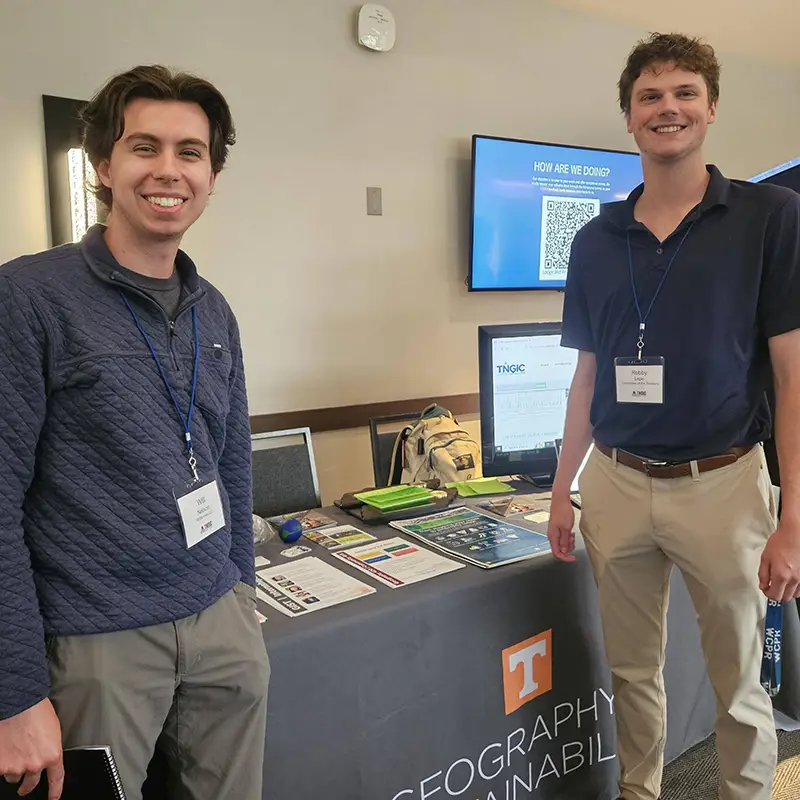
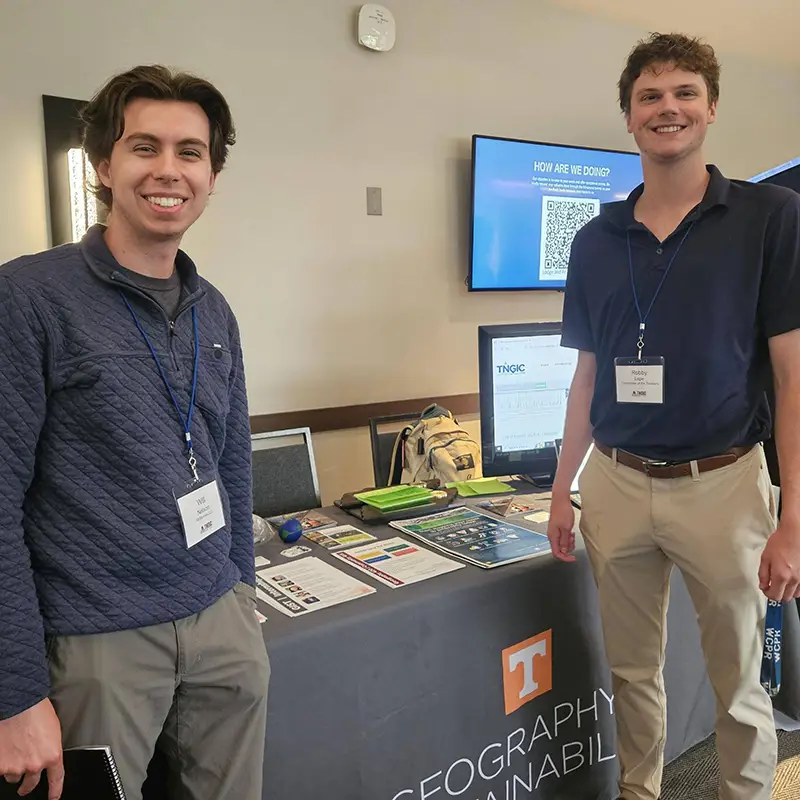
Two men smiling by a conference booth with the UT Geography & Sustainability department name on it
Recent alumni Will Nelson (left) and Robby Lape (right) at the UT Department of Geography and Sustainability table. Photo by Mayra Roman-Rivera.

Filed Under: Department News, Featured News, Human Geography, Physical Geography

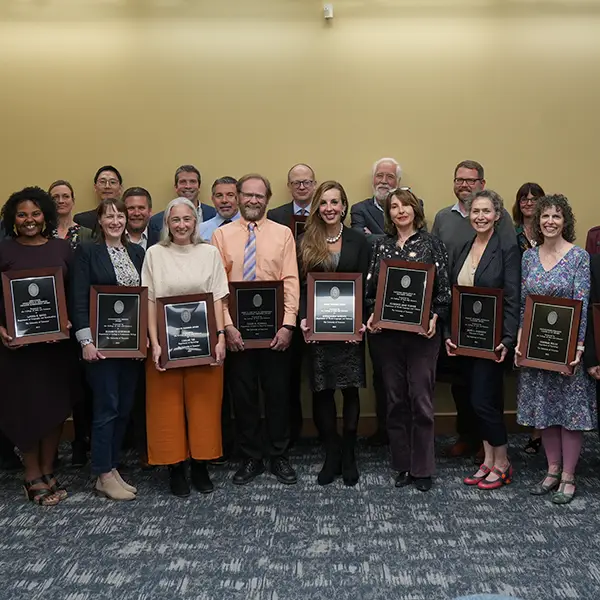
Men and woman holding awards plaques

Faculty Honored for Excellence at Annual College Convocation

March 27, 2024

During the 2023 UT College of Arts and Sciences Faculty Convocation, faculty with the Department of Geography and Sustainability received awards for excellence in research, teaching, and outreach. 

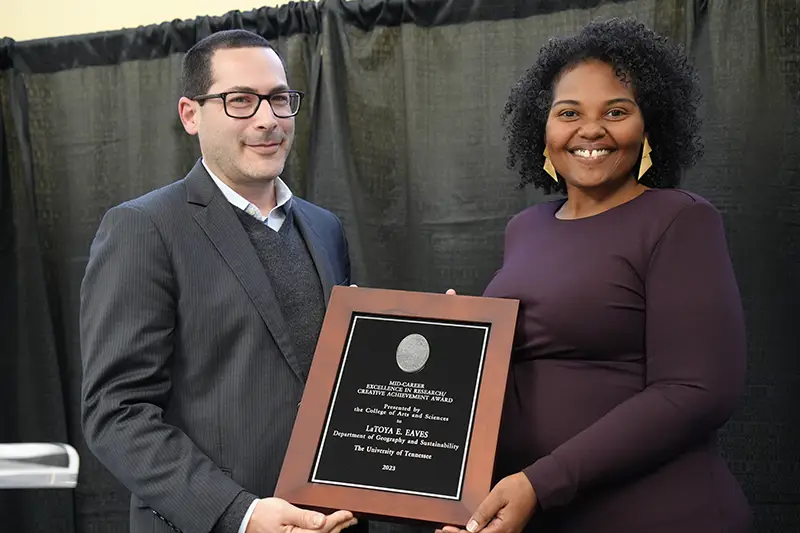
LaToya Eaves, Associate Professor

Excellence in Research & Creative Achievement Awards: Mid-Career

LaToya Eaves receives an award from Michael Blum at the Faculty Awards Ceremony

Eaves is one of the most significant scholars and intellectual leaders in the field of human geography. She is credited with pioneering the new area of “Black Geographies” as an emerging sub-discipline that has altered how all of human geography conceptualizes race, gender, and location.

Her studies focus on Black people’s lived experiences with placemaking and spatial knowledge, specifically how race, gender, class, and regional/place context interact to form patterns of identification, belonging, and social injustice. For her contributions, she is one of the first associate professors to be selected as a lifetime Fellow of the American Association of Geographers, with two prestigious awards from that association.


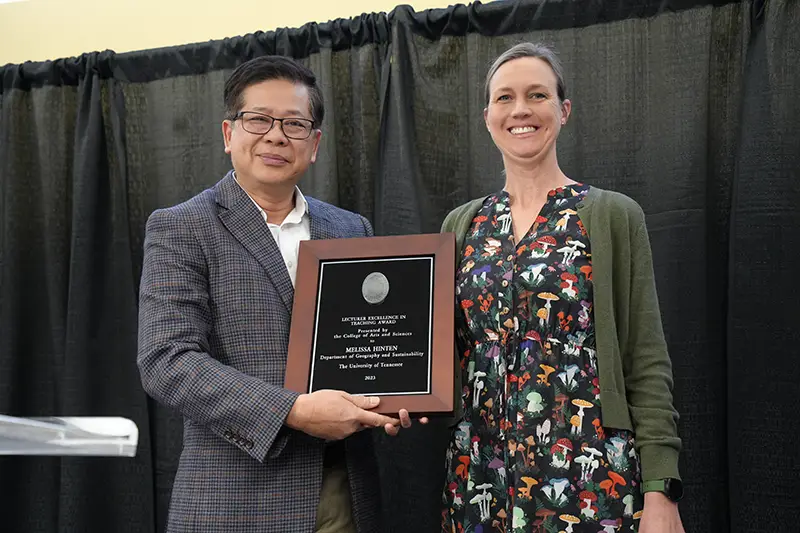
Melissa Hinten, Senior Lecturer

Excellence in Teaching Awards: Lecturer

Melissa Hinten receives an award from Liem Tran at the Faculty Awards Ceremony

Hinten is the director of the sustainability program in the Department of Geography and Sustainability. She has successfully led the program since 2017 and helped it to transition from an IDP to a full major. She has created numerous courses in sustainability, physical geography, and ecology courses which are essential to the sustainability program. As an instructional leader with the UT Center for the Integration of Research, Teaching, and Learning she helped institute evidence-based teaching and helped to make these programs more accessible to graduate students.

Hinten earned the Chancellor’s Honors Award for Excellence in Advising in 2019. Her teaching, mentorship and passion for knowledge greatly contribute to the broader goal and objectives of the department to not only provide an excellent education to our students, but also to create an environment for the college, the community, and our university.


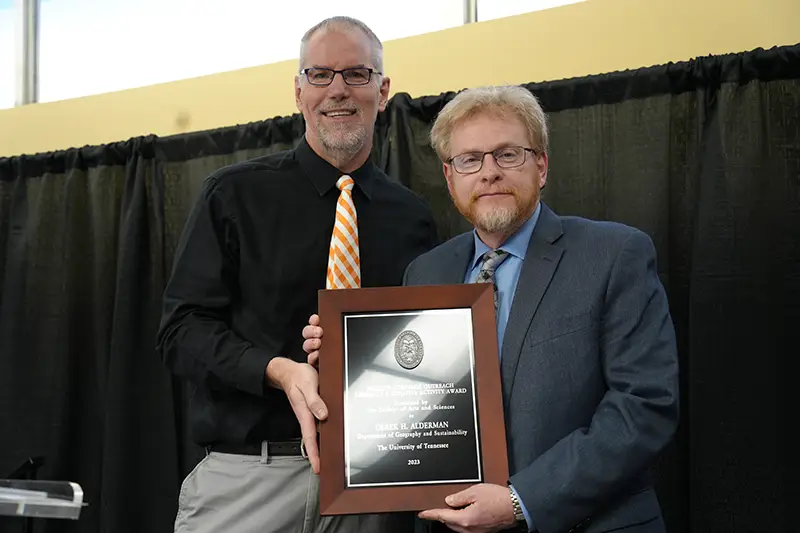
Derek Alderman, Professor

Faculty Academic Outreach Award: Research & Creative Activity

Derek Alderman receives an award from Todd Moore at the Faculty Awards Ceremony

Alderman is an exemplary role model of a scholar leveraging their research to assist wider communities in addressing issues of racial inequality and pushing for social justice in landscapes of public commemoration, naming, and tourism. A departmental awards committee composed of faculty and student members chose him as a nominee for his innovative perspective as a cultural geographer whose scholarship seeks to challenge and transform inequities in the organization of places, institutions, and social practices.

Alderman is a nationally recognized authority on street-naming, especially for civil rights icon Martin Luther King Jr. He explores place names as cultural arenas for reckoning with the histories and ongoing legacies of racism and as tools for promoting reconciliation, anti-racist education, and social justice.


Filed Under: Department News, Featured News

Overhead view of a city

The Conversation: ‘Excessively high rents are a major burden for immigrants in US cities’

March 26, 2024

an overhead view of Nashville
Nashville is one of the fastest-growing U.S. cities and increasingly a destination for immigrants. Joe Sohm/Visions of America/Universal Images Group via Getty Images
Madhuri Sharma, University of Tennessee and Mikhail Samarin, University of Tennessee

Rents across the U.S. have climbed to staggering levels in recent years. Millions of renters spend more than 30% of their income on rent and utilities, a situation that housing experts call being cost burdened.

High rents affect almost all segments of the population but are an especially heavy burden for immigrants, particularly those who have not yet become U.S. citizens. Immigrants, both documented and undocumented, play important roles in the U.S. economy. They often provide the cheapest labor in the riskiest of industries. Yet they are still not broadly accepted or supported in many U.S. cities.

We are geographers who study housing market issues, including racial-ethnic diversity and housing affordability. Our research on Nashville, which has emerged as an immigrant metropolis in the Southern U.S., suggests that foreign-born residents who are not yet citizens are far more burdened by high rents than other groups.

Many immigrant workers in Nashville spend more than 50% of their incomes on rent. This makes it hard for them to afford education and job training, healthy food, health care and other necessities that can help them participate as productive residents. Heavy rent burdens undermine their ability to have a higher standard of living and to be included in mainstream society.

As immigrants increasingly fan out across the U.S., we believe cities receiving new foreign-born residents should anticipate a growing need for affordable housing.

A 2022 study found that immigrant families in San Diego faced some of the highest rent burdens in the surrounding county.

Hard times for renters

The past 15 years have been challenging for renters across the country. In the 2008-09 recession, which was triggered by a collapse in the housing market, millions lost their homes to foreclosure and became renters. Tighter financing made it harder for others to buy homes. By 2015, almost 43 million households had been pushed into renting.

Today about 37% of U.S. homes are occupied by renters. By 2020, almost 46% of U.S. renters paid more than 30% of their household income toward rent. As of June 2021, the median monthly rent in the 50 largest U.S. cities was $1,575 – an 8.1% increase from June 2020.

The heaviest rent burdens fall disproportionately on minorities. Almost 46% of African American-led renter households are rent burdened, compared with 34% of white households.

The COVID-19 pandemic worsened housing insecurity for people of color because of longstanding racially targeted policies and widespread health and economic disparities. Renters of color faced higher cost burdens and eviction rates. In Nashville, this was especially true in Latino and Somali communities.

Why immigrant housing matters

Immigration is the main driver of population growth in the U.S., which is important for filling jobs and boosting tax revenues. After dipping because of pandemic-era restrictions in 2020-22, immigration to the U.S. started growing again, adding 1.1 million new residents in 2023.

Foreign-born residents make up 7.15% of the U.S. population today. Most of these immigrants are not citizens, although more than 878,000 people became citizens in 2023. The median length of time these new citizens spent in the U.S. before becoming naturalized was seven years.

Nashville is the largest metropolis in Tennessee and one of the fastest-growing immigrant gateways in the South. It is home to over 37% of Tennessee’s Latino population and has been a major destination for Latinos and other foreign-born residents since the early 2000s.

For our research, we used census data estimates for 2015-19 from the National Historical Geographic Information System covering metro Nashville’s 13 counties, which contain 372 census tracts. We found that Nashville’s most racially and ethnically diverse neighborhoods had the highest levels of rent burden.

This includes census tracts with high shares of foreign-born residents who are not yet citizens, especially if those residents are Black or Latino. Our analysis of the 37 census tracts (10% of the region’s total) with the largest shares of foreign-born residents who are not yet citizens shows that the average monthly rent paid by a household in these tracts was $1,306.20, compared with $1,288.70 metrowide.

In the 37 tracts with the largest shares of Latino residents and Black residents, we found that about 21% of households spent more than 50% of their household income on rent.

Our findings corroborate other scholarly analyses of Nashville’s Somali refugees, who tend to be clustered in communities that also house other diverse groups, including Egyptians and other African immigrants. In these areas, gentrification and urban renewal have forced several Black and Somali communities from ownership into renting.

We believe specific groups of foreign-born residents may either have been ineligible or didn’t know how to apply for government-funded housing and rental assistance programs and may have had to rent from predatory landlords as a result. Some Muslim immigrants also avoid applying for bank loans because of a concept in Islamic banking called ribā, which views charging interest on loans as unjust and exploitative.

More encouragingly, we found that tracts with newer housing stock, built since 2000, have relatively lower rent burdens even though those tracts are home to many Black and non-Asian minority residents. This suggests that newer development has an important role to play in mitigating rent, especially in suburban, relatively affordable locations. In the 37 census tracts with the most foreign-born residents who are not yet citizens, about 28% of the total housing stock was built in 2000 or later, compared with 23% across Nashville.

A row of men in hard hats, shoveling dirt.
Federal, state and city officials break ground in 2022 on a mixed-income residential development at Cayce Place, Nashville’s largest subsidized housing property. The city is replacing aging structures on the site, built between 1941 and 1954. Metropolitan Development and Housing Agency, CC BY-ND

Easing rent burdens

One of the best ways to mitigate rent burdens is to build more housing and create affordable housing. However, communities sometimes oppose affordable housing projects and pro-development zoning because of fears of crime, traffic congestion or populations viewed as undesirable. Nashville is not immune to this syndrome.

The cost of housing has been a heated topic in the Nashville region since the mid-2010s. A 2023 Urban Institute report recommended creating more affordable housing in Nashville by promoting partnerships among academic, faith-based and health care institutions that own land that could be developed for housing. And the Metropolitan Council for the Nashville region plans to substantially revamp building codes to promote new housing construction.

However, critics argue that the council gives too much weight to anti-development arguments. And there is little discussion of specific ways to help groups that are ineligible for benefits and assistance that are available to U.S. citizens.

A crowded meeting room with speakers clustered at a podium.
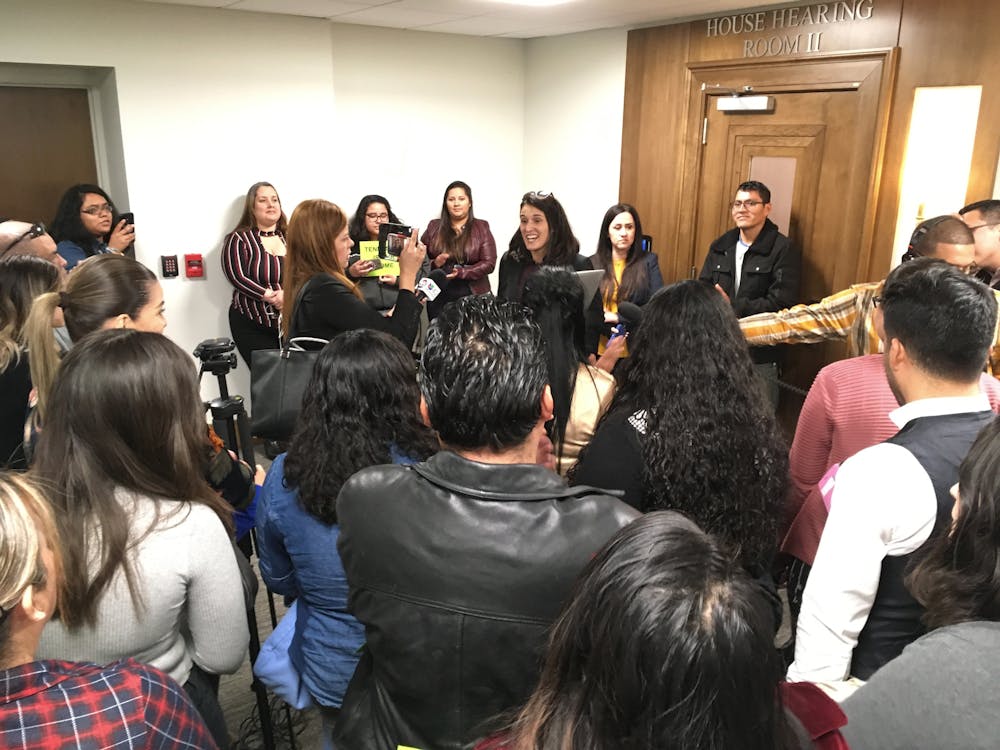
Members of the Tennessee Immigrant & Refugee Rights Coalition celebrate on March 26, 2019, after the defeat of a state bill that would have barred most landlords from renting housing to people in the U.S. illegally. AP Photo/Jonathan Mattise

A priority for cities

Our research shows that creating more rental opportunities can help reduce rent burdens for all. We see great potential to take this research further through community-based investigations of local nuances that may add to rent burdens, especially factors and processes that can’t be adequately captured in quantitative data analysis. Many local actors have important roles to play, including elected officials and local nonprofits and community organizations that work to promote rights for immigrants and refugees.

Given the important role that immigrants play in filling jobs and contributing to local economies, we believe that helping them afford housing is a smart strategy, especially for growth-oriented cities.The Conversation

Madhuri Sharma, Associate Professor of Geography, University of Tennessee and Mikhail Samarin, Lecturer in Geography and Sustainability, University of Tennessee

This article is republished from The Conversation under a Creative Commons license. Read the original article.

Filed Under: Department News, Featured News, Human Geography, Sustainability

Landscape photo of mountains

The Conversation: ‘National parks teach students about environmental issues in this course’

March 15, 2024

a photo of mountains
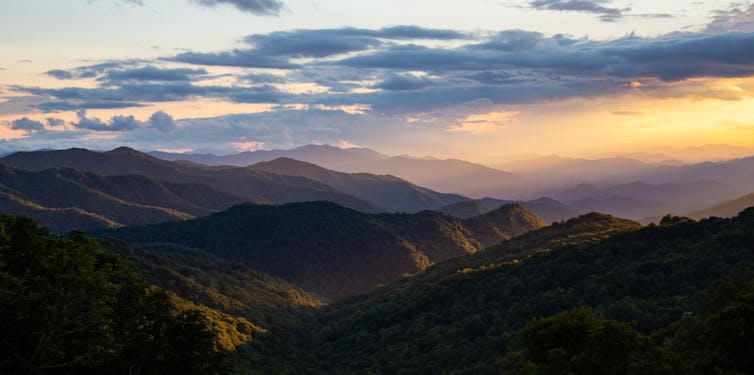
TK. John Hudson Photography via Getty Images
Seth T. Kannarr, University of Tennessee
Text saying: Uncommon Courses, from The Conversation

Uncommon Courses is an occasional series from The Conversation U.S. highlighting unconventional approaches to teaching.

Title of course:

Environmental Issues in National Parks

What prompted the idea for the course?

The University of Tennessee is a natural fit for this course, with the Great Smoky Mountains National Park and all the learning opportunities it offers being only a one-hour drive away.

Although I did not create this course, I jumped at the opportunity to serve as an instructor for it. Growing up as a Boy Scout, and later a merit badge counselor, I found a love for place-based education. I have always valued using the outdoors to teach about the theoretical concepts shared in the classroom.

What does the course explore?

Each week of the semester we discuss an ongoing environmental issue and then dive into an applied case study in a different national park. For example, in one week students learn about fire regimes, or patterns of wildfires over time. Then, in the next class, we discuss how the fire regimes in Sequoia National Park in California naturally maintain the ecosystem of the sequoia groves there.

The highlight of the semester is an in-person field trip to Look Rock in Great Smoky Mountains National Park. Here, my students and I meet a park ranger who teaches them about how trees sequester carbon from the atmosphere and how to measure it. The group also enjoys a hike to Look Rock Tower to learn more about the local area and see awesome views all around.

Why is this course relevant now?

Visitation numbers at national parks continue to rise each year. Most of my students have been to at least one or two national parks and are exposed to their increasing presence on social media.

If this course was just titled Environmental Issues, I do not believe it would have the same kind of draw it has now. Typically, the course fills to capacity early on every semester.

Using the parks as teaching tools not only keeps students engaged and entertained in the class but also gives them real-life lessons about environmental issues. They get front-row seats in learning about how landscapes change and the physical factors that affect them, like climate, topography and vegetation.

What’s a critical lesson from the course?

I tell my students up front and repeatedly that the world is not black and white. Environmental issues are complex and difficult to solve.

For example, the bald eagle population in the U.S. fell drastically after World War II, and eventually they were declared endangered. This was a result of being poisoned by the insecticide DDT.

Upon quick reflection, it seems that banning DDT in the U.S. in 1972 was the obvious solution to save the bald eagle. Since then, there have also been international efforts to ban DDT across the world for environmental reasons. But this leaves out the context that DDT kills mosquitoes, which spread the deadly disease malaria. In other parts of the world, DDT had saved an estimated 500 million lives from malaria by the 1970s.

This example shows the nuance that’s required when thinking about environmental issues and solutions. Sometimes there is not an obvious right answer, and students visibly struggle to address ethical questions like these.

What materials does the course feature?

I do not use a central textbook or provide specific assigned readings. Instead, students participate in group activities, enjoy illustrated lecture slideshows and YouTube videos and work with online resources.

One assignment has students use Google Earth to create a guided tour of a national park of their choice. They play the role of a park ranger through their written descriptions of tour stops. Students enjoy getting to choose which national park they would like to explore and highlight for visitors.

What will the course prepare students to do?

Upon completing the course, I want students to become critical visitors of national parks and protected areas. I want them to be aware of the role they play in what happens in those spaces and of the complexities of the issues there. Examples could include the continual overcrowding of national parks, the removal of Indigenous peoples from these lands or the history of Black discrimination in our parks.

Whether grappling with strictly environmental issues or the larger political and social struggles related to the national parks, I want students to open their minds to new perspectives. In a way, this course is an intervention for students to understand that they can make a difference and help shape an ever-changing world.The Conversation

Seth T. Kannarr, PhD Student in Geography, University of Tennessee

This article is republished from The Conversation under a Creative Commons license. Read the original article.

Filed Under: Department News, Featured News

Karen King's team investigating tree rings in the mountains

King’s Research Community Takes Root to Grow North American Climate History

March 13, 2024

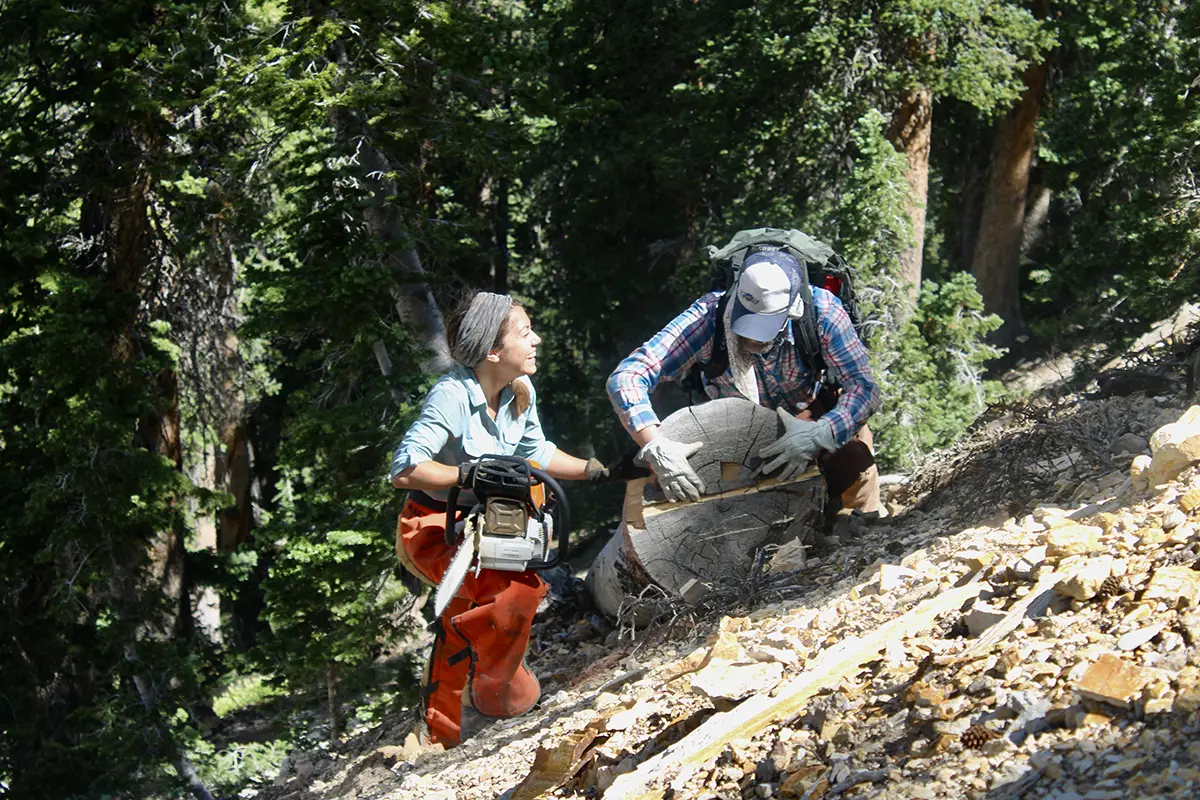
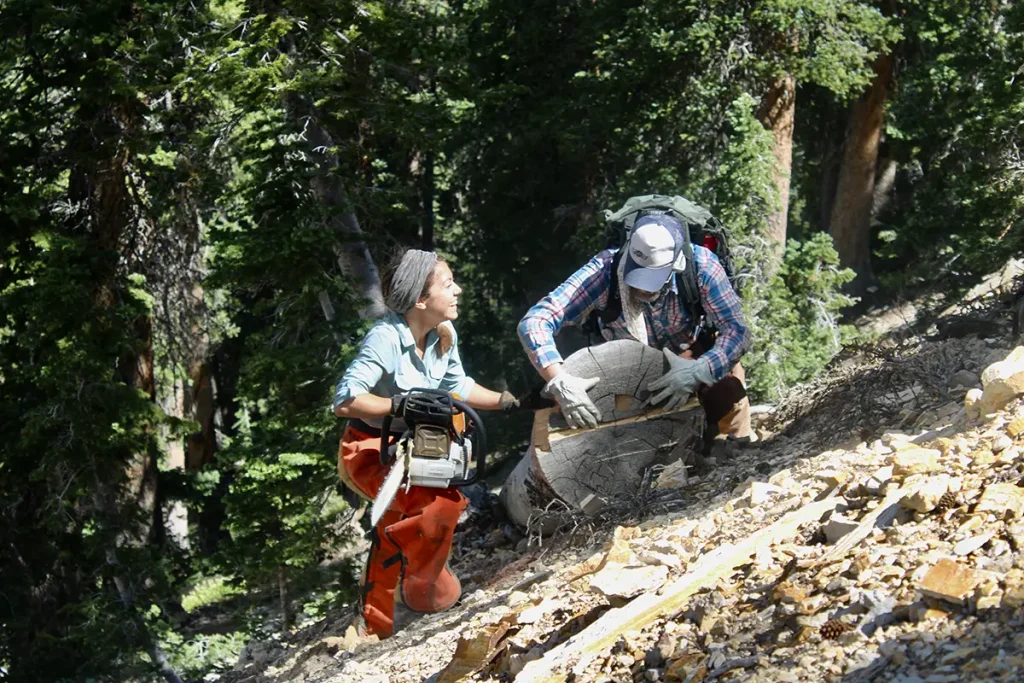
Karen King's team investigating tree rings in the mountains

Researchers across many scientific fields found themselves adapting investigative methods in the spring of 2020 to accommodate social-distancing and remote-work guidelines in the face of the COVID pandemic.

Karen King discovered that much of her actual fieldwork already met guidelines.

“As a dendrochronologist, ‘working remotely’—which I interpret as searching for old trees in some of the most remote forests of western North America—was something I’d already had a lot of experience doing,” she said. 

King joined UT in August 2023 as an assistant professor in the Department of Geography and Sustainability. She brought with her expertise in dendrochronology, plus experience in paleoclimate studies, biogeography, forest ecology, and fire-climate interactions. She applies these skills as lead author on research published in the January 2024 Science Advances. Her team used tree-ring chronologies to develop data that reconstructs a 500-year history of summer temperatures in the paper “Increasing Prevalence of Hot Drought Across Western North America Since the 16th Century.”

They combined their new dataset with preexisting drought and precipitation data to connect a historical record with current geographical climate conditions. COVID-related travel restrictions did lead them to find creative ways to fill in international gaps in data.

“I was able to get numerous preexisting collections from collaborators mailed to me,” said King. “This was particularly important for the southern Canadian portion of the network that would have otherwise been inaccessible. This project really is a testament to the power of building a strong and collaborative scientific community.”

Their results represent not just the needed data, but also contributions and expertise of fellow scientists, land managers, land stewards, technicians, and students.

“As my co-author and postdoc mentor Ed Cook once told me, ‘Atlases truly are community efforts,’ said King. “My co-authors and I are extremely proud to have built a dataset with our community that is also for our community.”

Their effort combines observational and modeling records with their new paleorecord, building evidence that hot drought—combined extreme heat and drought conditions—has been more frequent over the last century than ever before.

“Compared to the last circa 500 years, the data show an increasing trend in the frequency and spatial footprint of hot drought,” said King.

The data history reflects the imprint of the 1930’s era Dust Bowl and the modern megadrought, from around 2000 to the present, both characterized by some of the warmest temperatures over the 500-year time frame.

“I hope to clarify that recent trends in the occurrence of drought, simply defined by a lack of precipitation, are not unprecedented. Western North America is a very drought-prone region,” said King. “Instead, the nuance here with the recent decades is that these recent droughts are hotter on average than any previous droughts recorded since the mid-15th century.”

King’s ongoing research builds on their findings in the west as they establish a comprehensive North American Temperature Atlas—including studies in some favorite Tennessee natural areas.

“We are using slightly altered sampling approaches in the eastern US,” she said. “For example, we are targeting different species of trees. Here in the eastern US, we are primarily looking at data from Eastern Hemlock and Red Spruce. Some of our sample sites include Mount LeConte and Clingman’s Dome in the Smokies.”

Her team continues to find creative ways to maximize the depth and detail of their sample data. 

“In addition to collecting living and remnant samples, we are also looking into using archeological samples—e.g., wood samples from historical structures—to help extend the tree ring data even further back in time,” she said.

King and crew’s adaptability exemplifies the Volunteer Spirit as they build research foundations for both environment and community.

Filed Under: Department News, Featured News, Physical Geography

Headshot Photo of Karen King

King Team Studies 500 Years of North American Hot Drought

January 26, 2024

Karen King

Assistant Professor Karen King joined the UT Department of Geography and Sustainability in August 2023, bringing with her specialties in dendrochronology, paleoclimate, biogeography, forest ecology, and fire-climate interactions. She applies her experience in these areas as lead author on research published in the January 2024 Science Advances.

Her team used tree-ring chronologies to develop data that reconstructs a 500-year history of summer temperatures across western North America in the paper “Increasing Prevalence of Hot Drought Across Western North America Since the 16th Century.” They combined their new dataset with preexisting drought and precipitation data to connect a historical record with current geographical climate conditions.

Their findings indicate that hot drought—combined heat and drought conditions—has been more severe over the last century than ever before. The reconstruction allows for important new findings regarding the influence of summer temperatures on the development of notable past droughts in western North America.

King’s ongoing research builds on these findings.

“I am currently working on expanding the Western North American Temperature Atlas to provide complete spatiotemporal coverage of the entire North American continent over at least the past 500 years: the North American Temperature Atlas,” said King. “This will allow for a more complete evaluation of the spatial patterns of temperature-drought interactions back through time.”

Her research was picked up by The Washington Post and State of The Planet. 

Filed Under: Department News, Featured News, Physical Geography

Headshot photo

AAG Fellowship Recognizes Shaw’s Innovations in Geography

January 12, 2024

Written by: Randall Brown

Shih-Lung Shaw

Professor Shih-Lung Shaw joins a distinctive group of UT Department of Geography and Sustainability colleagues this month in his election as a Fellow of the American Association of Geographers (AAG).

Shaw is a UT Chancellor’s Professor and the Alvin and Sally Beaman Professor of Geography. This new designation enhances another long-held fellowship, adding appreciated depth of recognition to his accomplishments within his field and confirming his contributions as a geographer. 

“It’s a great honor of being elected as a Fellow of the AAG, in addition to the honor of being elected as a Fellow of the American Association for Advancement of Science (AAAS) in 2008,” said Shaw. “The AAG Fellow reflects a recognition from my peers in the field of geography while the AAAS covers a much broader science community. It is very rewarding to be both an AAG Fellow and an AAAS Fellow.”

AAG’s fellowships recognize geographers who have made significant contributions to advancing geography through research, practice, and careers devoted to strengthening the field, including areas of teaching and mentoring. AAG fellows contribute to the association’s initiatives; advise on AAG strategic directions and grand challenges; serve on AAG task forces or committees, and/or mentor early and mid-career faculty.

“I have been doing some of these tasks for the AAG and anticipate doing more down the road to serve the field of geography and beyond,” said Shaw. “These works also are likely to further enhance the visibility of UT at the national level.”

AAG recognizes Shaw as a leader in the areas of time geography and applications of geographic information systems (GIS) to transportation. In his research, he has focused on the development of a space-time GIS framework, used to analyze a large variety of human dynamics phenomena. These include longtime issues such as travel dynamics and more recent phenomena such as COVID infection patterns. As modern technologies made it easier for people to carry out a variety of activities and interactions online in a virtual space (e-shopping, online social networks, e-education, telehealth, etc.), Shaw further proposed human dynamics research to study the interactions between what happens in the physical world and what occurs in the virtual world as a hybrid physical-virtual world.

“Shaw has been a visionary throughout his career in showing how GIS can better represent the reality of our lives,” said Nicholas Nagle, professor and head of the geography and sustainability department. “His demonstration of how to practically map and analyze human activities in space-time have been duplicated in commercial GIS and are now standard. Currently, he is pushing GIS into new frontiers where both the quantitative and qualitative aspects of space and place are represented.”

Shaw and his collaborators have organized a Symposium on Human Dynamics Research at the annual AAG meetings for 10 years. He also serves as the lead editor of a book series of Human Dynamics in Smart Cities published by Springer, which has published six books since 2018.

Beyond his innovative and important research, Shaw has been a leader in the AAG, serving as chair of the Transportation Geography Specialty Group, treasurer of the GIS group, and on the AAG membership committee. He has also been president of the University Consortium for Geographic Information Science (UCGIS) and has been a strong supporter of a project to promote the professional development of women in GIScience.

Nationally, AAG announced 17 geographers as 2024 fellows in a variety of practice areas.

“The breadth and depth of experience among this year’s AAG fellows is a tribute to their commitment and to the breadth of the discipline of geography,” said Gary Langham, executive director of AAG. “We are grateful for their insights and leadership in advancing AAG and the field.”

Patrick Grzanka, divisional dean for social sciences, noted Shaw’s high level of scholarship and leadership in his area, and the impact of such a fellowship on the UT community.

“Shaw’s election to fellowship in the AAG is a testament to his pathbreaking, field-shaping work,” said Grzanka. “He joins several other AAG Fellows in the department, which is a gem in the crown of the College of Arts and Sciences.”

Shaw’s election brings the total number of AAG fellows on the UT geography and sustainability faculty up to six, including Derek Alderman, LaToya Eaves, Sally Horn, Budhendra Bhaduri (UT/ORNL), and Carol Harden (Emerita). 

“Geography is a diverse field that covers research from physical geography, human geography to geospatial technologies,” said Shaw. “The six AAG fellows in the department conduct their research with different focuses.”

Shaw’s research spans across human geography and geospatial technologies that complement the research of these colleagues, collectively covering many key research topics in geography and sustainability to form a strong AAG team at UT for moving the field forward.

Filed Under: Department News, Featured News

Headshot photo

AAG Hardwick Award Honors Alderman’s Mentorship

January 10, 2024

Derek Alderman

Professor Derek Alderman’s scholarship in geography lives in tandem with a keen awareness of the way involved mentorship impacts education and professional development. His approach has now earned him the 2024 Susan Hardwick Excellence in Mentoring Award from the American Association of Geographers (AAG).

The Hardwick award recognizes AAG members who demonstrate extraordinary leadership, build supportive academic and professional environments in their institutions, and guide the academic and or professional growth of their students and junior colleagues.

“Derek’s mentoring of talented new geographers is at the heart of his work as an educator and researcher,” said Gary Langham, executive director of the AAG. “He has enriched his students’ lives and fundamentally shaped geography in the 21st century. It gives us great pleasure to present him with this award.”

The award will be formally bestowed at the annual AAG meeting April 16-20, 2024, in Honolulu, Hawaii. It is a deeply meaningful acknowledgement for Alderman, both professionally and personally.

“Within our discipline of geography, and within the AAG, it’s a major recognition,” said Alderman. “So, it’s obviously very humbling and flattering that my discipline is recognizing the work I’ve been doing.”

Alderman is a former president of the AAG, previously served as head of the Department of Geography and Sustainability, and is president-elect of the UT Faculty Senate. He sees the award as a mark of his successful contribution within an ongoing legacy of mentorship.

“On a more personal level, it means a great deal because, over the years, I’ve had tremendous mentors,” he said. “There’s no way I would have been able to get into my field and feel like I’ve succeeded without having that mentorship that they’ve given me. So as much as this recognizes my mentorship of other people, it is in many ways a recognition of the role that mentorship plays in my field.”

One former student is now a UT faculty member thanks to Alderman’s mentorship. He served as thesis chair for Stefanie Benjamin while on the faculty of East Carolina University. She now is an associate professor in the Department of Retail, Hospitality, and Tourism Management within the College of Education, Health, and Human Services.

“I can honestly share that he is the reason I continued on my academic path,” said Benjamin. “Derek has such an incredible heart and love for his students, and it is evident with everything he embodies—a mentor who truly centers empathy, patience, and joy.”

Alderman’s mentoring of early-career colleagues also contributed to this recognition. Solange Muñoz, associate professor and director of undergraduate studies in geography and sustainability, has appreciated Alderman’s collaboration since joining the department.

“Derek takes his role as mentor extremely seriously,” said Muñoz. “He isn’t simply available when you need him, but rather behind the scenes he is actively making sure that his mentees are being considered for awards, recognition, or some kind of professional development.”

Alderman keeps in touch with former graduate students like Jordan Brasher, who now works with ESRI, a leading developer for geographic information system (GIS) software. 

“His mentorship reaches beyond merely giving academic advice,” said Brasher. “It is also about building confidence and resilience in students so that we can thrive no matter where life takes us upon the completion of our studies. He regularly asks how my family is doing, how I’m healing or growing after a challenging life event, or what he can do to support my next endeavor.”

Katrina Stack, a current geography PhD candidate and research fellow, is one of the latest students supported by Alderman’s mentorship.

“A doctoral program is not an easy endeavor to navigate, but having Professor Alderman as my advisor has made this time truly enjoyable and beyond rewarding,” said Stack. “I know that if I need help or input—whether it be on a paper I am writing, a conference session, grant application, or just an idea I need to talk through—he is quick to take a call or make time for a meeting. He also challenges me, encouraging me to stretch my thinking and ideas in new ways. Professor Alderman inspires me to push myself in the work I do and become a positive force in the communities I am a part of, just like he is.”

As these connections show Alderman’s personal legacy of mentorship, he also appreciates sharing it with the geography and sustainability department as a whole.

“That collaborative relationship that develops between mentors and those who are being mentored is not just happening here with me, it is happening all across the hallways,” said Alderman. “One of the other reasons I’m very proud about getting this award is that it sheds important light on the really fantastic things that we do in this department.”

Filed Under: Department News, Featured News, Human Geography

  • « Previous Page
  • 1
  • 2
  • 3
  • 4
  • 5
  • …
  • 11
  • Next Page »

Recent Posts

  • Research Shows Disparity in Indian Healthcare Access
  • Hurricanes devastated Florida’s East Coast – then seagrass made an unexpected comeback
  • As renaissance fairs become big business, can they retain their counterculture roots?
  • The Department of Geography and Sustainability is pleased to announce the S. David Freeman Sustainability Scholarship, applications now open!
  • Geography Professor to Study Data Centers’ Impact

Recent Comments

No comments to show.
an illustration of geographers engaged in research surrounding a globe

Geographers Engage With The World

Request More Information

Support The Department

Department of Geography and Sustainability

College of Arts and Sciences

Burchfiel Geography Building
1000 Phillip Fulmer Way
Room 304
Knoxville, TN 37996-0925
865-974-2418
utkgeog@utk.edu


Facebook Icon    X Icon    Instagram Icon    YouTube Icon

The University of Tennessee, Knoxville
Knoxville, Tennessee 37996
865-974-1000

The flagship campus of the University of Tennessee System and partner in the Tennessee Transfer Pathway.

ADA Privacy Safety Title IX